

There are different types of texts according to intention, discursive function, type of language or format. In 1979, Egon Werlich proposed a classification with five types of texts (narration, description, exposition, argumentation and instruction) that responds to the way in which human knowledge interprets and shapes reality.
The French linguist Jean-Michel Adam expanded this concept in 1992, stating that text types are not rigid categories, since several text types can be identified in the same piece of writing.
Thus, despite the fact that there is no unity of criteria regarding the classification of texts, we can find the following types:
- Narrative textsare stories with characters and plot. They develop a conflict in a defined time and space. Example: novels, short stories.
- Descriptive texts: they represent the characteristics of something or someone. They can be subjective or objective. Example: portraits, technical descriptions.
- Argumentative texts: they present an idea and defend its validity with arguments. Example: essays, debates.
- Expository textsExpository texts: they present information in a clear and concise manner. Example: academic texts, reports.
- Instructional texts: give step-by-step instructions. Example: recipes, manuals.
- Normative texts: establish norms or rules. Example: laws, regulations.
- Informative texts: they offer objective information. Example: news, reports.
- Persuasive texts: they try to convince the reader of something. Example: advertising, propaganda.
- Scientific texts: they explain the results of research. Example: research articles, theses.
- Advertising texts: they promote products or services. Example: advertisements, brochures.
- Humanistic texts: they reflect on the humanities. Example: essays, literary criticism.
- Lyric textsexpress feelings and emotions. Example: poetry, songs.
- Dramatic texts: they present actions through dialogue. Example: plays, scripts.
- Unimodal digital texts: documents created or digitized. Example: PDF files, eBooks.
- Multimodal digital texts: they include various media. Example: web pages, multimedia presentations.
Narrative texts
This type of text narrates a succession of events that take place in a defined space and time. They are generally narrated in chronological order to facilitate the reader’s knowledge of the evolution of the story.
A narrator describes the actions, which may be real, fictional or based on real events, within a structure consisting of a beginning, a climax and a denouement. Even if he narrates fantastic events, the text must be plausible to the reader.
The short story, the novel, the chronicle or the report are some examples of this type of text.
Example of narrative text:
“And saying these and other similar reasons, releasing the adarga, he raised the spear with two hands and gave with it such a great blow to the muleteer in the head, that he knocked him to the ground so badly beaten, that if he were to second with another, he would have no need of a master to cure him.”
Don Quixote of La Mancha, by Miguel de Cervantes.
Descriptive texts
Descriptive texts represent the characteristics and qualities of a person, animal, landscape, object, phenomenon or feeling.
This representation can be objective, precise and approximate to reality, subjective, it lets the author’s opinions and feelings show, or sensorial, oriented to create sensations in the reader.
The presence of descriptive texts is recurrent in portraiture, prosopography, technical texts or lyrical poems.
Example of descriptive text
The suspect has been described as a tall male, approximately 6’2″. Very white skin, marked greenish veins, with a circular mole on his left cheek and a slight tremor on his right hand.
3. Argumentative texts
These are texts based on a central idea with the intention of proving or disproving it. The argument is developed throughout the text to make it more comprehensible to the readers.
Argumentative texts may use resources such as quotations, verifiable data or examples to reinforce the argument. They express ideas in a clear, direct and orderly way to gain coherence and capture the reader’s attention.
Reviews, theses, opinion pieces, or essays are some examples of argumentative texts.
Example of an argumentative text
Documentary review Blackfish
Blackfish is a documentary that denounces the treatment of captive animals in the marine parks of a well-known multinational company.
The whole story revolves around Tilikum, a killer whale that was captured and separated from his family during the 1980s. The animal was involved in several attacks on humans as a consequence of the stress caused by his captivity.
The broadcast of the documentary sparked controversy and was a great impact for the company, which suffered great losses due to the pressure of public opinion.
See also: Structure of an argumentative text and Types of arguments.
4. Expository texts
Expository texts present a series of ideas in an informative way. They can serve as the basis for an oral discourse or for the exposition of concepts in a specialized field.
They serve to communicate ideas in a pedagogical way, use technical or specialized language and are usually structured in short and concrete sentences that make their comprehension easier.
Example of expository text:
Tea comes from a plant called Camellia sinensis. After harvesting, the leaves of Camellia sinensis go through different processes (withering, drying, oxidation, fixing, etc.) to obtain green, white, black, Oolong or post-fermented tea.
See also Characteristics of expository texts.
5. Instructive or directive texts
These are texts that offer the necessary indications to carry out an action. Their content is usually specific and they use a language that allows the instructions to be accessible to most readers.
They present the information in a hierarchical way (steps, sequences, numbered list, etc.) and use graphic resources, such as infographics or images, to facilitate comprehension.
Example of instructional text
How to use the floor cleaner:
- Wear gloves to avoid direct contact with the product.
- Open the container and use one measure of cleaner per liter of water.
- Dampen the floor mop in the mixture.
- After cleaning, wipe with a new floor mop dampened with water only.
6. Normative texts
Normative texts are created to record rules or guidelines that are to be complied with in a given context.
Normative texts of a legal nature, such as laws and agreements , are relevant to the social order, since they are written to be complied with and their non-compliance entails a sanction.
Legal texts are one of the best known and most relevant types of normative texts, they must be created by lawyers, judges or legislators and have legal validity.
Example of normative text
“To the supplier who does not comply with his legal or contractual obligations with the consumer, the judge may apply a civil fine in favor of the consumer, which will be graduated according to the seriousness of the fact, independently of other indemnities that may correspond(…).”
Article 52 of the Argentine Consumer Defense Law.
7. Informative texts
They are a type of text whose function is to inform about reality in an objective way. They relate real facts and order the information from the most important to the least relevant.
They dispense with the author’s emotions or points of view and use a concrete language that adapts to the topic addressed.
Even if specific topics are addressed, the information should be accessible to all readers.
Example of an informative text
“Covid-19: Compound identified that blocks virus access to cells”.
Researchers at the University of Geneva detected a group of compounds from the “sulfhydryl” family, capable of inhibiting the SARS-CoV-2 virus.”
Fragment of news published in the Mexican newspaper El Universal, November 2020.
8. Persuasive texts
These are texts whose function is to persuade or induce a change of opinion or behavior in the reader.
To do so, they can resort to rational appeal, using arguments, or to subjective appeal, using emotions.
Paragraphs are usually short and sentences simple, and they can also use graphic elements to reinforce the main idea.
Advertising texts or political propaganda are examples of persuasive texts.
Example of persuasive text
In the United States, cigarette smoking causes 80-90% of lung cancer deaths.
One less cigarette is one more breath of life to enjoy with those who love you.
9. Scientific or academic texts
They show the result of scientific or academic research, are aimed at specialized audiences and are used in both natural and social sciences.
In this type of text, objective and verifiable data, methodologies, findings and conclusions obtained through research are collected.
They use technical language in accordance with the field of research addressed. The text should be clear and concise and, in addition, should provide references to the sources of the research.
Example of a scientific text
“(…)Between 1906 and 1912 the English biochemist Sir Frederick Hopkins discovered that rats fed a diet of “purified” products, containing all the substances hitherto considered necessary for nutrition, stopped their growth process. This was restarted when the rats were given a small quantity of fresh milk daily.
Sanchez, L. P. (2013). Brief history of vitamins. Sanitas Medical Journal, 16(3), 142-145.
10. Advertising texts
These are texts with a clear commercial orientation, which show the characteristics of a product or company, in order to promote the consumption of its goods and services.
Advertising texts are loaded with persuasive resources, which lead the consumer to have a favorable opinion about the product.
They usually present ideas in a concrete way to make them easier to remember. They are creative texts full of associations of ideas that generate impact on the public.
Advertising copy is aimed at a specific group of people and the messages are designed to appeal to that specific audience.
Example of advertising copy
“The detergent that cleans your clothes and cares for your hands, now, in liquid version. Higher performance, cleaner”
11. Humanistic texts
This type of text is characterized by disseminating knowledge related to the Humanities (Literature, Literature, Ethics, Anthropology, Sociology, Arts, etc.). It uses argumentation and exposition as the main resources for the transmission of ideas.
Although they deal with academic topics, they are not always objective, rather they are reflections or interpretations of the authors. The author’s conclusions are usually subject to debate or controversy, given their subjective nature.
They employ technicalities specific to the area of knowledge they deal with and invite reflection and critical thinking.
Example of a humanistic text:
“Freedom is being able to say “yes” or “no”; I do it or I don’t do it, whatever my bosses or others say; this suits me and I want it, that doesn’t suit me and therefore I don’t want it. Freedom is deciding, but also, don’t forget, realizing that you are deciding. The opposite of letting yourself go, as you can understand. And in order not to let yourself go, you have no choice but to try to think at least twice about what you are going to do; yes, twice, I’m sorry, even if it hurts your head…”
Excerpt from Fernando Savater’s Ethics for Amador.
12. Lyrical texts
Lyrical texts express ideas through a rich and sophisticated poetic language, which fulfills an aesthetic function and in which literary figures such as metaphor, comparison or hyperbole abound.
They express feelings and emotions from the point of view of the author or his characters and can be in verse or prose.
The aesthetic component is also expressed in its form, through the number of verses, the number of syllables in each verse and the use of rhyme.
Example of lyric text
Let each word carry what it says.
Let it be like the tremor that sustains it.
May it be like a heartbeat.Rafael Cadenas, Ars poetica
13. Dramatic texts
The story is told through dialogue and the events are divided into acts or scenes. Dramatic texts are the basis of theater and its different genres, such as tragedy, comedy or sainete.
The stories can be fictional or real and the action is carried out by one or more characters.
Each act or scene has its own structure of beginning, climax and denouement and in turn are part of an overall structure.
These texts may include annotations, which are notes in the margin with which the author leaves instructions for the actors.
Example of a dramatic text
The teacher- How many are one and one?
The student – One and one are two.
The professor (admiring the student’s wisdom): – Oh, very good, I think you are very advanced in your studies. You will easily obtain your full doctorate, Miss.
The pupil: – I am delighted, all the more so because you are the one who says so.
Eugene Ionesco, The Lesson
14. Unimodal digital texts
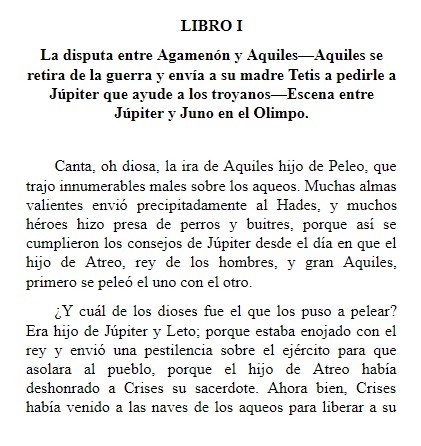
This refers to all documents that were created using a word processor, such as Word, Google docs. Texts that have been digitized also fall into this category, such as when we scan a document to convert it to PDF format.
They are the same as a printed text, what varies is that their format is digital and they do not always require the Internet for their creation or dissemination.
In some cases, unimodal texts are just digital versions of existing texts.
Example of unimodal text:
15. Multimodal digital texts
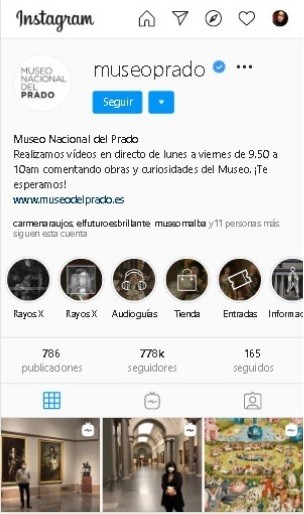
These are digital texts that, in addition to the written content, include resources such as audio, video, animations, graphics or gifs.
Their objective is feedback (feedback) or user participation, so they require an Internet connection.
We can find three types of multimodal text:
- Multimediaare texts that include written content, images and/or video to reinforce the message of the text.
- Hypertextis a text unit designed specifically for the web, which in turn is part of a larger unit, such as a blog within a web page. It may contain multimedia resources.
- Intertext: they allow interaction with the user, either because he can comment on the content or because he can generate his own content.
Example of multimodal text:
References:
-
Alexopoulou, A. (2011). Textual typology and reading comprehension in E/LE. Revista Nebrija de Lingüística aplicada a la enseñanza de Lenguas, (9), 102-113.
-
Cervantes Saavedra, M. D. (1953). El Ingenioso Hidalgo Don Quijote De La Mancha (1st ed.). Zaragoza: Luis Vives.
-
Esteban Del Campo, Á., & Aparicio, Y. (2016). Poetic anthology of Rafael Cadenas.
-
Homer, Iliad, I vv. 1-13.
-
Ionesco, E. (2006). The lesson.
-
Marotto, C. M., & Duarte, A. (2007). Narrative text comprehension and inferences. Subjectivity and cognitive processes, (10), 163-183.
-
Sanchez, A. C. (2006). Texts, text types and specialized texts. Revista de filología de la Universidad de La Laguna, (24), 77-90.
-
Sánchez, L. P. (2013). Brief history of vitamins. Sanitas Medical Journal, 16(3), 142-145.
-
Savater, F. (1991). Ética para amador (No. BJ1142. S38 2001.). Barcelona: Ariel.
See also: